bob whittaker

Music has always been closely connected to the way I think about painting. As a musician as well as a painter, I am interested in what remains when something heard and experienced through time is translated into visual form.
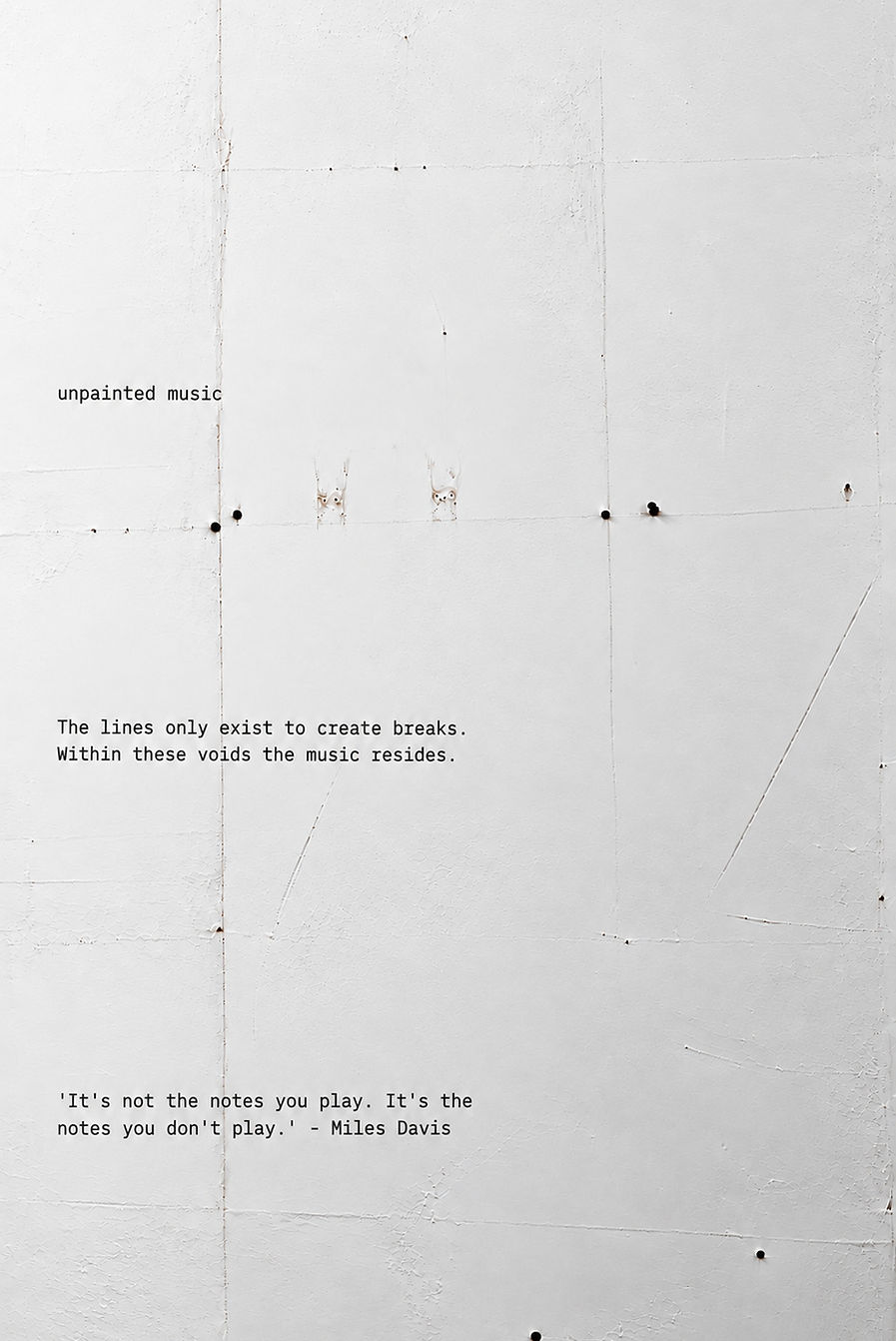
The paintings begin with a fragment of music which I transcribe into a measured visual blueprint, using lines and rectangular structures to map its rhythm, duration and pitch. This initial drawing functions something like a score: a structure from which the painting can develop.
My experience of performing music is important to what happens next. A musician doesn't simply reproduce a score; a performance involves interpretation, emphasis, timing, feeling and response. I approach painting in much the same way. I consider how I might perform the music, then allow something of that interpretation to enter the painting. Lines may be extended or interrupted, intervals adjusted and forms allowed to overlap. The blueprint remains present, but is changed through the act of making.
I am drawn to reduction and to the tension that can exist within apparently simple forms. A small change in the length or position of a line can alter the character of an entire painting. Empty areas become active, while intersections and breaks can suggest moments of coincidence, interruption or connection. Within this restricted language, small decisions can carry considerable weight.
I don't intend the finished paintings to be read as musical notation or decoded back into their source. Music provides both a point of departure and an underlying structure, but the painting becomes an interpretation of that structure - closer to a performance than a transcription. It retains something of the rhythm, duration and feeling of its source while becoming an independent object, open to other readings.


The blueprint acts as the score; the finished painting is the performance